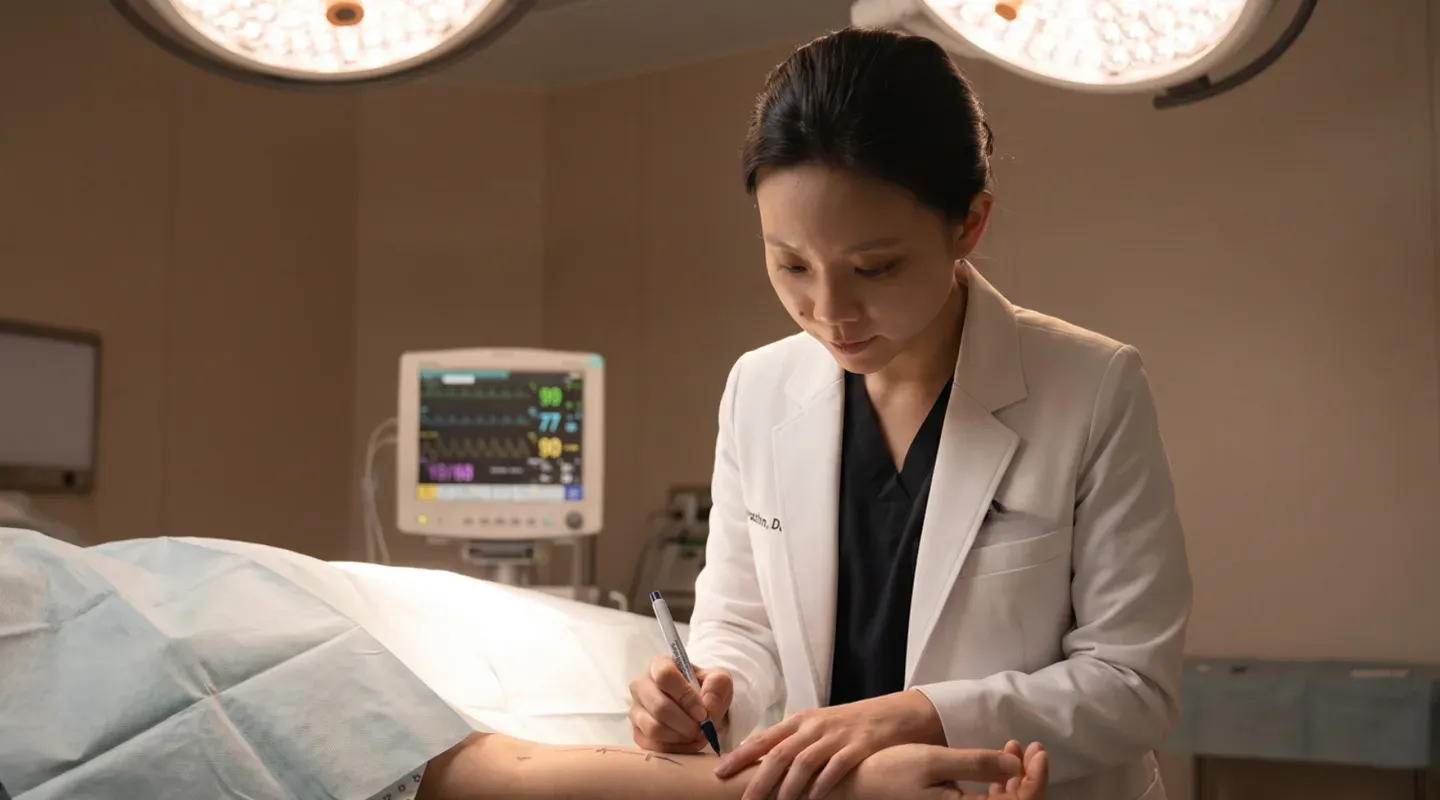
Reconstructive plastic surgery after cancer, trauma, or congenital conditions — led by craniomaxillofacial-credentialed surgeons.
Overview
Reconstructive plastic surgery after cancer, trauma, or congenital conditions — led by craniomaxillofacial-credentialed surgeons.
The consultation
Every reconstruction begins with a detailed consultation reviewing your surgical record, pathology report, and any radiation history. We assess skin quality, chest-wall anatomy, and donor sites before recommending an approach. Where possible we involve your home oncologist directly. Patients flying from abroad receive a written plan before they book flights.
Choosing your technique
The right reconstruction depends on your anatomy, treatment history, and how much downtime you can take. Implant-based reconstruction is faster and involves less donor-site morbidity, while autologous reconstruction such as DIEP or TRAM uses your own tissue and tends to produce the most natural, lasting result. We recommend the approach that suits you specifically, not the one that is simplest for us. Most full reconstructions are staged over twelve to eighteen months.
The procedure & staging
Implant-based reconstructions take two to three hours under general anaesthetic, while autologous flap reconstructions are longer and require microsurgical expertise. Most reconstructions are completed in stages: the primary surgery, then a symmetrising or nipple reconstruction three to six months later. All procedures are performed in our ACHSI-accredited theatres with overnight observation and a private nursing team from day three.
Documentation & insurance
We provide full surgical documentation for insurance claims — operative reports, an itemised cost breakdown, and procedure codes. Many reconstructive procedures are partially or fully covered where medically necessary. We cannot guarantee coverage, but our paperwork is thorough and provided in your insurer's preferred format.
Choose a focus
This discipline is organised into 1 areas.